



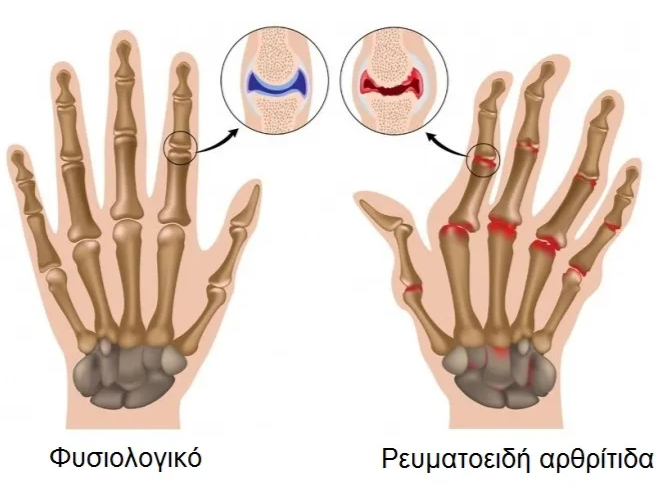
It is a chronic inflammatory, autoimmune and progressive disease of the joints, which causes pain, swelling and stiffness. There may be periods where symptoms become worse, known as flare-ups or flares. In some people, the condition can damage a wide variety of body systems, including the skin, eyes, lungs, heart and blood vessels.
Symptoms:
- Tender, warm, swollen joints
- Affected joints experience pain and stiffness (especially in the morning after waking up).
- The affected joints are enlarged and show deformity and ankylosis (The fingers of the hand have the characteristic inclination outwards, towards the side of the little finger).
- The skin becomes thin and shiny, and characteristic subcutaneous nodules appear.
- Fatigue, fever and loss of appetite
There’s no cure for rheumatoid arthritis. However, early diagnosis and appropriate treatment enables many people with the condition to have periods of months or even years between flares. This can help them to lead full lives and continue regular employment.
The goal is to reduce pain, maintain as much mobility as possible in the joints and limit deformities.
The main treatment options include:
- medicine that is taken long term to relieve symptoms and slow the progress of the condition
- physiotherapy and occupational therapy can help keep the person mobile and manage any problems they have with daily activities
- surgery to correct any joint problems that develop